



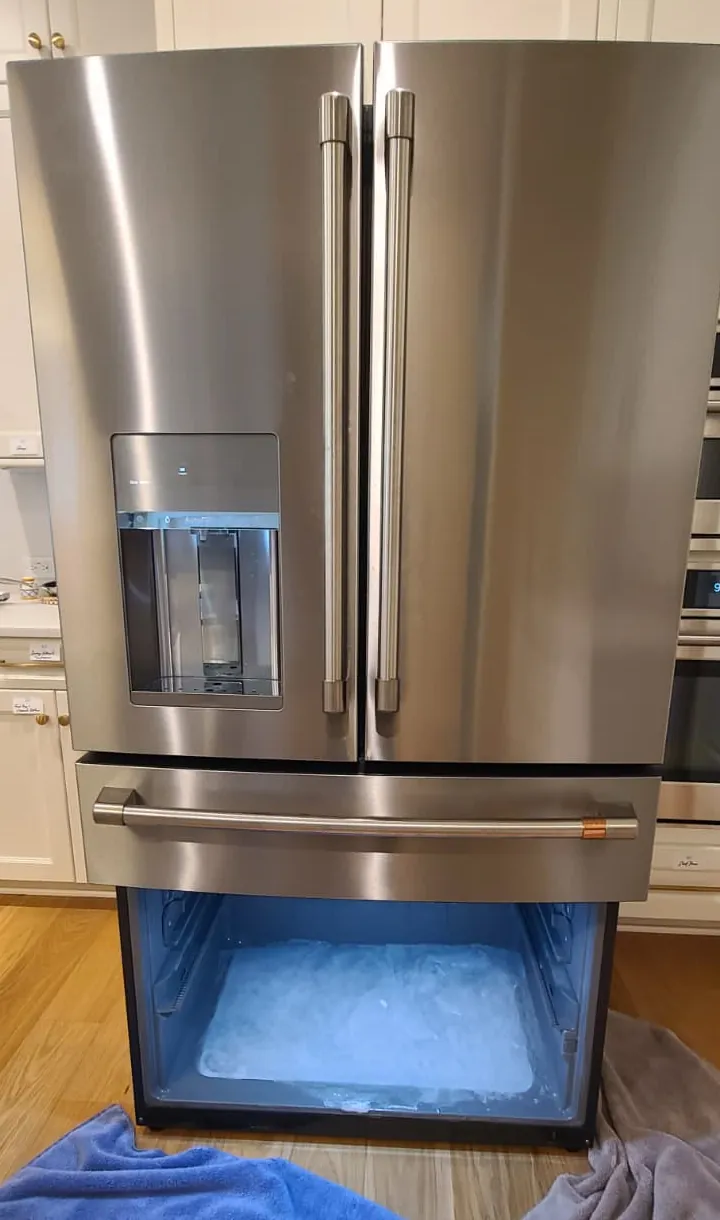
A Growing Ice Sheet and Water on the Floor
A Carmel homeowner contacted Alex Appliance Repair about a relatively new Café French-door refrigerator. Ice was building up across the bottom of the freezer, and water was leaking onto the kitchen floor. Removing the freezer drawer exposed a broad sheet of frozen water beneath the storage area.
Water was freezing inside the compartment instead of draining away. The combination of floor ice and a water leak pointed toward a drainage problem. The service visit focused on tracing where defrost water was collecting and why it could not leave the freezer.
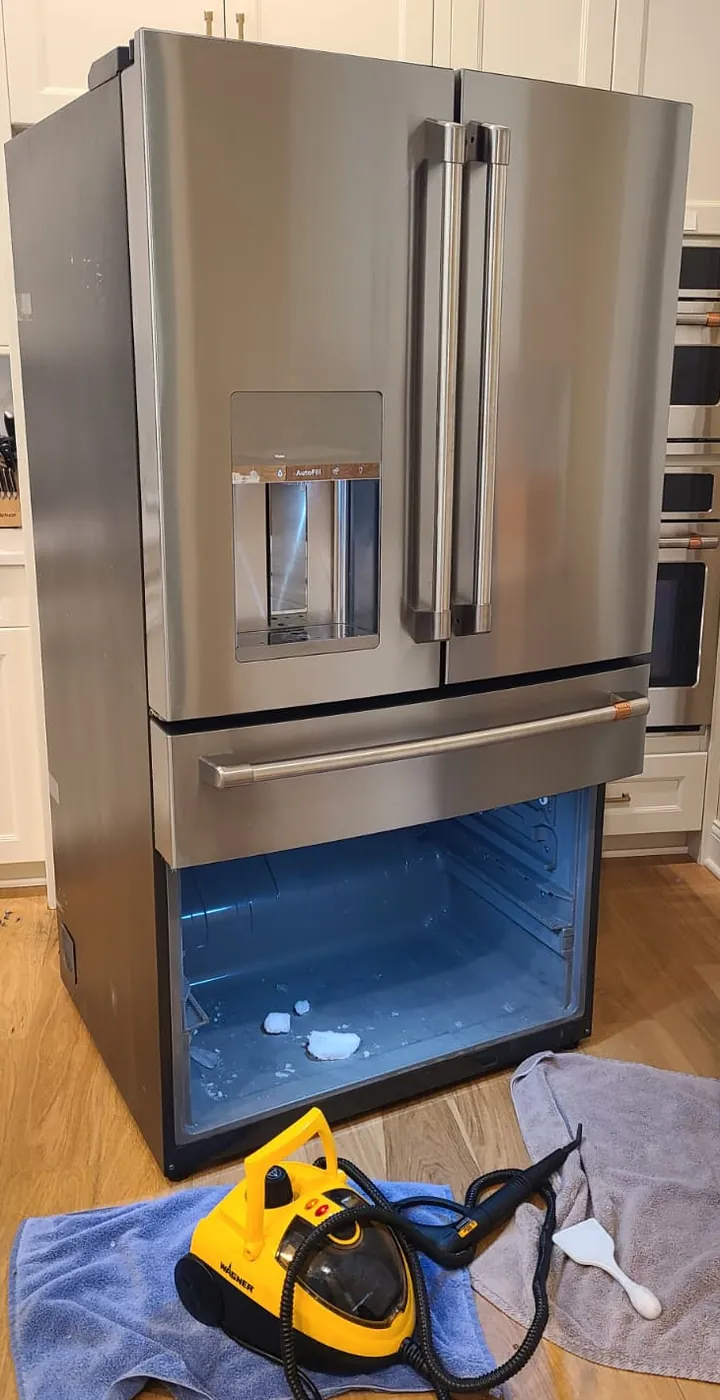
The open freezer in this first view still contains the ice buildup, before the drain was cleared.

The Refrigerator: Café CVE28DP2NJS1
The model label identified this refrigerator as CVE28DP2NJS1. Recording the exact model helped identify the freezer layout and access needed for the drain inspection.
The problem on this unit was a restricted drainage path. No compressor, electronic control or other major component replacement was required for the documented repair.
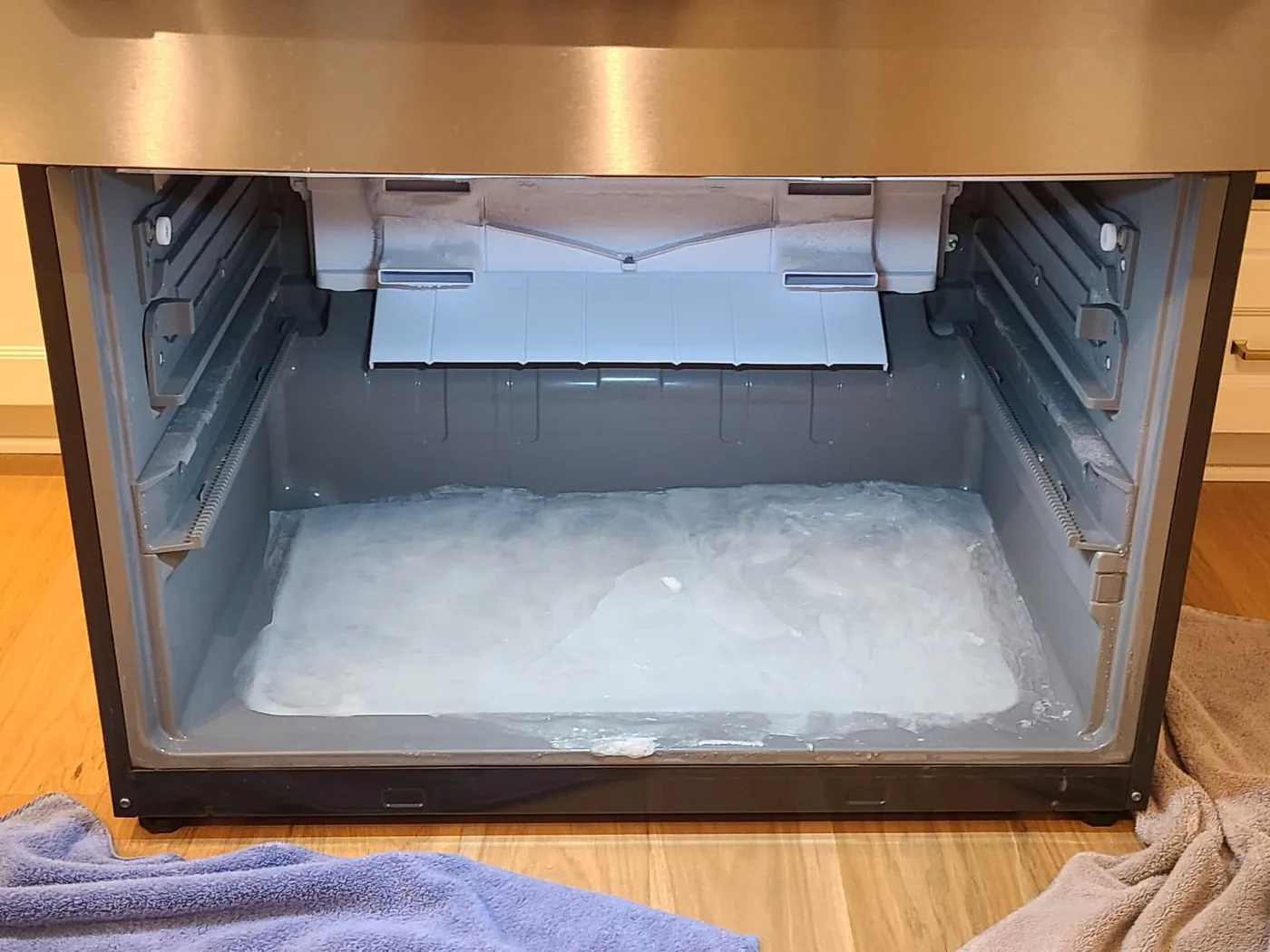
Ice Was Building Up Across the Freezer Floor
The lower compartment contained a thick, continuous sheet of ice rather than a few scattered ice cubes. Water had collected on the freezer floor and frozen there. The broad pattern was consistent with repeated accumulation of water that could not drain away.
That pattern gave the diagnosis a direction, but it did not identify the obstruction by itself. The frozen area had to be thawed and inspected before the reason for the restriction could be established.
Why a Freezer Drain Can Cause a Floor Leak
During automatic defrost, frost on the evaporator melts. The resulting water normally passes through a drain opening and tube to a pan beneath the refrigerator. A blocked passage can leave water inside the cold compartment, where it freezes again.
With more water arriving during later defrost cycles, ice can build up and water can eventually escape onto the floor. GE Appliances describes this drain path in its bottom-freezer support guidance. On this service call, inspection was needed to find what was preventing flow.
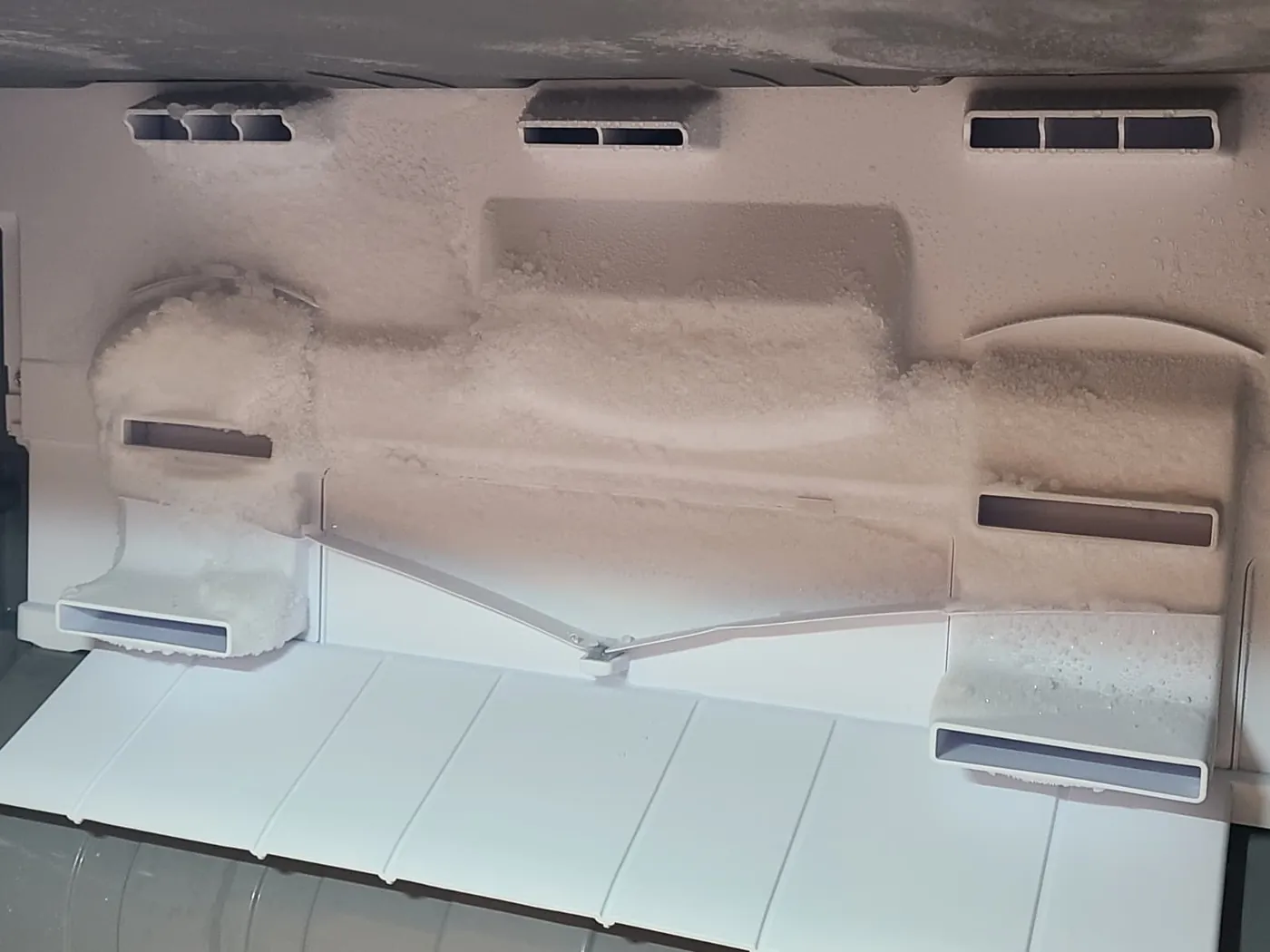
Accessing the Frozen Drain Area
We protected the surrounding floor, disconnected power for access and removed the freezer components needed to reach the evaporator and drain area. Frost and ice were visible across the rear cover, as well as on the freezer floor.
The buildup obscured the area that needed inspection. Controlled thawing and ice removal were necessary before the drain passage could be evaluated. The rear-cover photograph shows the condition before that access work, not the obstruction itself.
What Was Blocking the Drain?
Once the area was thawed, inspection found insulation foam obstructing the freezer drain opening. Factory-applied insulation material was interfering with the passage on this particular refrigerator, preventing defrost water from flowing freely.
The obstruction was not simply loose food debris or the visible sheet of ice. Clearing the frozen water exposed the underlying restriction that had allowed water to collect in the first place.
With the passage narrowed, meltwater could accumulate again during later defrost cycles. The drain opening itself needed attention before the freezer could be reassembled.
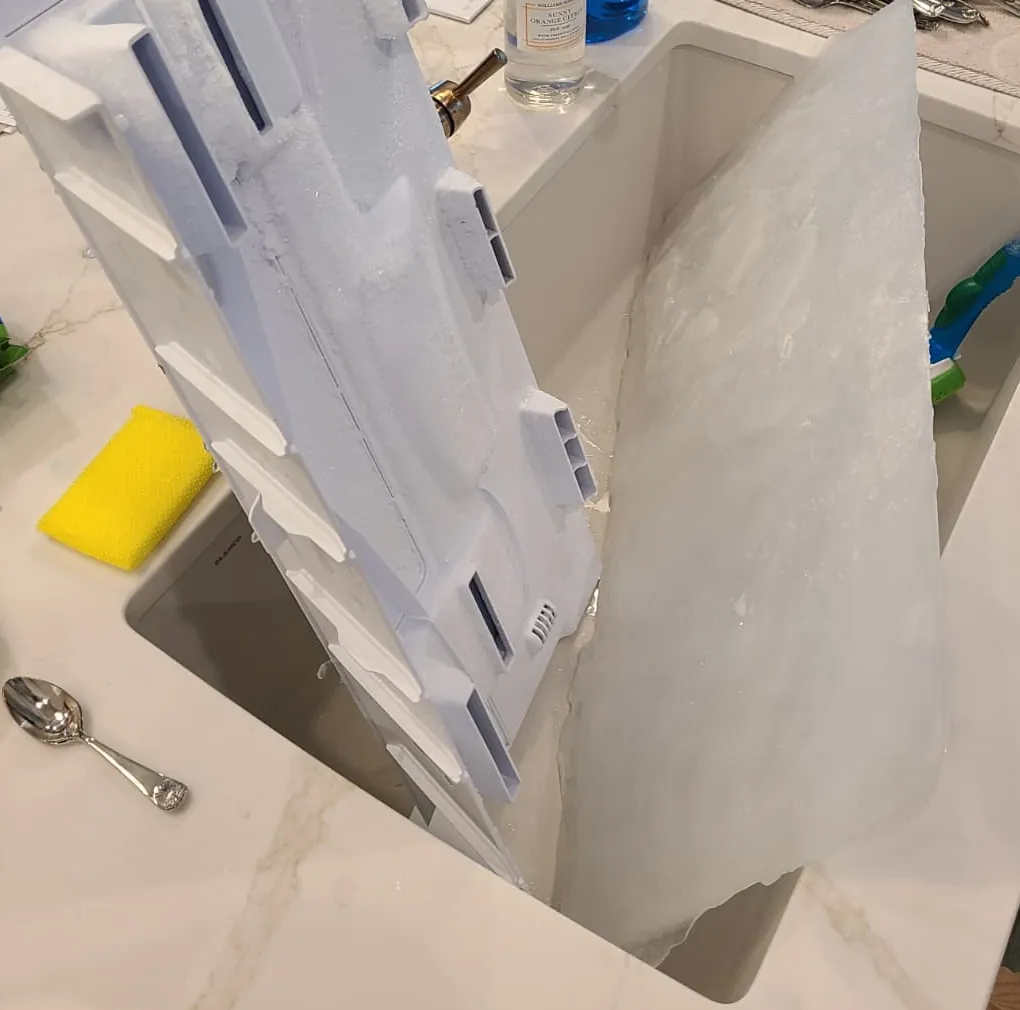
Removing the Accumulated Ice
The freezer needed a thorough defrost before reassembly. The removed panel and large ice sheet show how much frozen material had accumulated. Remaining ice and moisture were cleared from the affected area so the drain could be inspected and the components returned to position.
The thawing work was part of the controlled service process. Simply lifting out the floor ice would have improved the appearance temporarily, but it would not have opened the restricted passage.
Clearing the Obstruction and Checking Flow
We carefully removed the foam material interfering with the drain opening, cleared the drain channel and flushed the drainage path. Water flow was then checked to verify that the drain could carry water away.
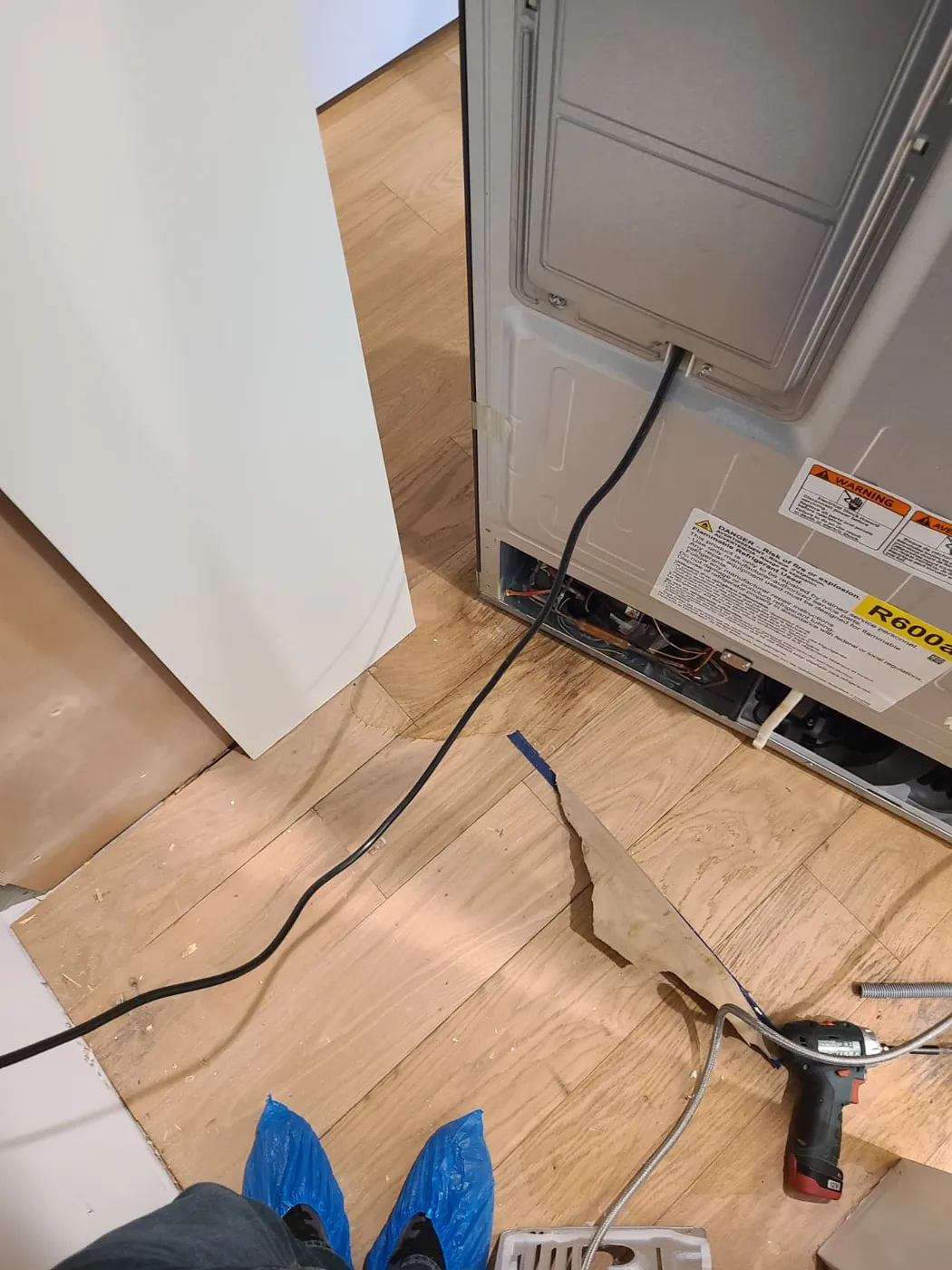
The rear service-area photograph provides context for access during this repair; it is not a close-up of the foam blockage. The corrective work was drain clearing and obstruction removal, with no documented replacement of major refrigerator components.
From Defrosting to Reassembly
The service setup shows the freezer open during thawing, with protective towels and the technician's equipment nearby. This photograph was taken during the work, before all freezer components were reinstalled.
After the obstruction was removed, the remaining ice and moisture were cleared. We reinstalled the freezer components, reassembled the refrigerator and returned it to operating condition. The completed check confirmed water flow through the drain path.
That flow check was the final step connecting the diagnosis to the repair: the water now had a clear route out of the freezer.
When Ice Keeps Returning
If a sheet of ice returns on the freezer floor after being removed, note where the water first appears and whether it collects inside the compartment or outside the refrigerator. Those details help distinguish a drainage concern from other possible leak sources.
A recurring leak should be inspected. Avoid chipping ice with sharp tools or dismantling electrical or refrigerant components. Keep the wet area clear to reduce slipping and arrange service if water continues to collect.
Refrigerator Repair in Carmel, Indiana
If your refrigerator is leaking or ice is accumulating under the freezer drawer, our refrigerator repair service in Carmel can inspect the drain and defrost system and explain the findings. Include the model number and where you see the water when booking.
See our Carmel service coverage or browse more real appliance repair stories. Alex Appliance Repair is an independent appliance repair provider operated by Aksenov LLC.
Book service online